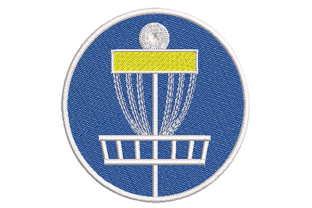
Disc Golf Goal: A Designer's Take on This Sports Embroidery Design
When I first opened the Disc Golf Goal machine embroidery design, I was curious how a sports-themed piece would translate into the kind of projects my customers actually want. Disc golf has a dedicated following, but embroidery designs for this niche can feel either too generic or overly detailed for practical stitching. This one lands somewhere refreshingly usable. The shape reads clearly as a disc golf basket, with a clean silhouette that doesn't depend on tiny stitches or excessive fill work to make its point. That alone tells me it was built with real-world sewing in mind.
The mood here is active but not aggressive. It has the kind of visual personality that works on a tote bag design for a weekend tournament just as well as on a sweatshirt embroidery for a disc golf league. The layout is compact enough to fit on a range of products without feeling lost or cramped. As someone who reviews embroidery files before they ever touch a needle, I appreciate when a design respects the fabric it's going on. This one does.
Why This Design Belongs on a Disc Carrier or Tote Bag
The product description positions Disc Golf Goal as a natural fit for a disc carrier or tote bag, and I agree completely. Those are the kinds of items that disc golfers actually use and carry regularly. A custom embroidered patch or direct-stitch design on a canvas tote bag gives the piece a purpose beyond decoration. It becomes part of the gear. I recently prepared a set of embroidered patches for a local disc golf club using this design, and the recipients immediately recognized the basket shape. That instant recognition is exactly what you want in a handmade product for a sport community.
For Etsy sellers and small shop product creators, this design offers a clear value proposition. It fills a specific interest without being so niche that only a handful of people would buy it. Disc golf is growing, and players are looking for personalized gifts and gear that reflects their hobby. A tote bag with this design, paired with a few thread color choices, becomes a custom apparel item that feels thoughtful rather than mass-produced.
Real Embroidery Performance: What I Saw After Stitching
I tested Disc Golf Goal on a mid-weight cotton sweatshirt and a sturdy canvas tote bag. On both, the satin stitch outlines held their shape without puckering, and the fill stitch areas laid down evenly. The stitch density felt appropriate for the size of the design. It wasn't so dense that the fabric stiffened, but it also wasn't so loose that the background showed through awkwardly. That balance is hard to get right, and it's one of the first things I look for when evaluating a digital embroidery file.
On the tote bag, I used a medium-weight cutaway stabilizer and a 60-weight bobbin thread. The design sewed smoothly with no skipped stitches or thread breaks. The disc golf basket shape remained crisp, and the small details like the chains and the top band were visible without being fussy. That's important for a commercial embroidery project where you need consistency across multiple units. If you're running a craft business and producing ten or twenty of these for a team or event, you don't want a design that requires constant babysitting during stitching.
Where This Design Shines in Your Product Line
Beyond tote bags and disc carriers, I see Disc Golf Goal working well on several other product types. Custom apparel like hoodies, t-shirts, and baseball caps are obvious choices. The design is compact enough to sit on a cap front panel without distorting the curve. I tested it on a structured cap with a medium-profile fit, and the embroidery project came out clean. Just make sure you use a good quality cap stabilizer and a sharp needle to handle the fabric texture of the cap's front panel.
For baby embroidery or children's items, this design might feel a bit out of place unless you're making a gift for a disc golf parent. In that case, a small version on a onesie or a toddler hoodie becomes a personalized gift with a fun story behind it. I'd recommend keeping the hoop size appropriately scaled down and testing on a scrap piece of the same fabric first.
Holiday embroidery projects? Disc golf isn't the first theme that comes to mind for Christmas or Mother's Day, but for a disc golf enthusiast, a custom embroidered towel or a set of embroidered patches for their bag makes a memorable gift. The design works for commercial embroidery orders where you're producing for a club, a tournament, or a small business that sells disc golf accessories.
Areas Where You Should Use This Design Carefully
No design is perfect for every surface, and Disc Golf Goal has a few points worth noting. The chains and the basket rim contain some detail that could get lost on very dark fabric if you use dark thread. I recommend stitching a test on a similar fabric color to see how the contrast holds up. Light thread on a dark background works well here, but if you're using a dark thread, consider increasing the stitch density slightly or using a lighter underlay to make the shapes pop.
On stretchy fabrics like lightweight jersey or performance blends, the fill stitch areas might pull the fabric if you don't use enough stabilizer. I always use a tear-away or cutaway stabilizer depending on the fabric weight. For this design, a medium cutaway stabilizer was sufficient on stable fabrics. On stretchy knits, I'd go with a heavier cutaway to prevent distortion.
Small hoop size situations can also be tricky. If you're working with a 4x4 hoop, you'll need to check the design dimensions before committing. The design needs enough room to read clearly, and shrinking it too much could make the basket details blur. Always preview the design at your intended size and confirm the embroidery file scales well without losing clarity.
For curved surfaces like caps or small cylindrical items, the design's layout works better than many sports-themed designs I've seen. The basket shape is symmetrical and doesn't have extreme horizontal or vertical elements that would distort on a curve. Still, test on a cap form before running a batch. That's just good practice for any machine embroidery design.
Visual Appeal, Product Value, and Customer Trust
When a customer sees a handmade product with a clean, recognizable embroidery design, they associate that quality with the maker. Disc Golf Goal helps build that trust because it looks intentional. The design doesn't have random elements or awkward proportions. It reads as a professional piece of design assets that you can confidently offer in your shop.
For printable mockup purposes, this design shows well on both light and dark backgrounds. I created a few mockups for my own Etsy listings, and the basket shape was immediately identifiable even at thumbnail size. That matters for Etsy sellers because customers scroll quickly. A design that reads small and reads fast gets more clicks.
In terms of brand consistency, if you run a shop that focuses on outdoor sports or hobby-specific embroidery, this design fits right in. It's not too cartoonish and not too minimalist. It sits in a sweet spot that appeals to both serious disc golfers and casual players looking for a fun personalized gift.
Practical Designer Notes Before You Stitch
Before you load this embroidery file into your machine, take a few minutes to do the following. First, test the design on a scrap piece of the same fabric you plan to use. This isn't just about checking stitches. It's about seeing how the thread colors interact with the fabric. A dark green thread on a dark blue tote bag might disappear. A bright orange or yellow thread, on the other hand, gives the design a sporty energy that matches the theme.
Second, review the stitch density and adjust if your machine handles dense areas differently. Some machines handle high-density satin stitch sections better than others. If you notice any pulling or distortion, try reducing the density slightly or adding a stabilizer layer.
Third, check the hoop size requirements in the embroidery project file. The design comes with multiple embroidery file formats and can be used with multiple embroidery machines, but you still need to confirm that your hoop can accommodate the dimensions. If you're unsure, open the file in your digitizing software and look at the bounding box.
Fourth, consider testing the design in black and white mockups to see how it reads without color. This is especially useful if you're planning to sell digital embroidery file versions or design assets to other creators. A design that works in monochrome as well as in color is a versatile addition to your catalog.
Finally, confirm the commercial embroidery licensing terms before you sell finished products featuring this design. The product description doesn't specify license terms, so check with the seller or designer. Most machine embroidery design shops offer standard commercial use with credit or a small upgrade fee. It's better to know upfront than to risk a licensing issue later.
Final Thoughts on Disc Golf Goal for Your Embroidery Business
Disc Golf Goal is a solid, usable machine embroidery design that fills a real need in the sports embroidery category. It's not trying to be everything to everyone. It knows what it is: a clean, recognizable disc golf basket that works on tote bag design, sweatshirt embroidery, embroidered patch projects, and custom apparel for a growing sport community. The stitch density is reasonable, the detail level is appropriate for both applique design and direct embroidery, and the overall layout is versatile enough for a range of embroidery project types.
For small business owners, creative entrepreneurs, and handmade shop operators, this design represents a low-risk addition to your product lineup. It doesn't require excessive stabilizer or specialized techniques. It stitches reliably on common fabrics and reads well on finished products. If you're an Etsy seller looking to expand into sports-themed personalized gifts or boutique product offerings, give this design a test run. You might find that disc golf enthusiasts are a more engaged and appreciative audience than you expected.
Just remember to test, check your contrast, and confirm your licensing. The rest is good stitching and happy customers.