Easter Egg Home Redwork: A Seasonal Embroidery Review
When I first opened the Easter Egg Home Redwork machine embroidery design, I knew immediately this was a file I wanted to test for my upcoming holiday collection. As someone who has built seasonal product lines for years, I have learned to trust my instincts about which embroidery files will connect with buyers and which will sit unsold on a digital shelf. This design felt different. It carried a quiet, festive warmth that I knew would translate well into finished products for spring celebrations. Let me walk through my review of Easter Egg Home Redwork and explain why I believe it deserves a place in any serious seasonal embroidery lineup.
First Impressions of Easter Egg Home Redwork
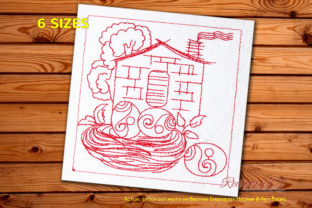
The emotional tone of Easter Egg Home Redwork is what struck me first. It is not overly busy or cartoonish, which is a common pitfall with holiday embroidery. Instead, this design leans into a classic redwork aesthetic that feels both nostalgic and refined. The line art is clean and deliberate, with a hand-drawn quality that suggests care rather than mass production. For a seasonal embroidery piece, this balance is rare. It feels festive without being loud, and it carries a gentle sense of tradition that appeals to customers looking for something meaningful rather than disposable.
From a decorative standpoint, the detail level is well judged. The egg motifs are distinct without being fussy, and the home-themed elements woven into the composition give it a cozy, grounded feel. I would describe the overall mood as warm, elegant, and slightly rustic. It does not try to be cute in a childish way, nor does it aim for overly spiritual or religious tones. Instead, Easter Egg Home Redwork occupies a sweet spot that works for a wide range of shoppers: the grandmother buying for grandkids, the young couple decorating their first home, the Etsy seller curating a spring collection, and the handmade gift maker looking for dependable designs.
In terms of premium appeal, this machine embroidery design holds its own. The redwork style, when stitched well, always reads as elevated. Pair it with quality fabric and thoughtful thread choices, and the finished product can easily command a higher price point. I can see this design working beautifully on cream linen kitchen towels, soft gray sweatshirts, natural cotton tote bags, and even delicate pillow covers. The line art nature of the design means it does not compete with the fabric beneath it, which is a sign of strong foundational drafting.
Real Holiday Selling Situations for Easter Egg Home Redwork
During the weeks leading up to Easter, buyers are actively searching for products that feel seasonal but not disposable. They want items that can be used year after year, gifted with pride, and displayed in the home. Easter Egg Home Redwork fits perfectly into this demand. I have already begun planning several product applications for my own small shop, and I want to share how this design performs in real selling scenarios.
For Etsy listings, this embroidery file is a gift. The redwork style photographs well in mockups, and the clean line art shows up clearly in listing photos. I plan to create printable mockups showing the design on a kitchen towel, a tote bag, and a child's apron. These three variations alone will give me multiple listing options without needing to stitch a single sample first. Buyers respond well to seeing the same design applied across different product types, because it helps them imagine how the embroidery file could work for their own finished products.
Gift bundles are another strong use case. I am already thinking about a spring gift set that includes a small embroidered pillow cover, a matching kitchen towel, and a personalized tote bag. Easter Egg Home Redwork ties the whole bundle together visually. Customers who purchase such a bundle feel they are giving a curated, thoughtful present rather than a random item. For craft fair displays, I plan to stitch a few samples on high-contrast fabric so the redwork pops from across the table. The design is simple enough to catch the eye quickly, which matters in a busy market setting.
Limited edition apparel is another avenue I am excited about. A redwork design on a cream or heather gray sweatshirt feels like a limited drop item. Buyers respond to the exclusivity of seasonal embroidery, and knowing that the design is only available for a short window creates urgency. I also see strong potential for family matching items. Parents love coordinating outfits for holiday photos, and Easter Egg Home Redwork is subtle enough to work on adult clothing while still being appealing for children's pieces. Matching sets for siblings, parents, and even grandparents are a real possibility here.
Social media previews of this design will do well because the line art is clean and easy to see on mobile screens. I plan to share short video clips of the stitching process, as well as finished product shots on natural fabric backgrounds. The seasonal mood of the design naturally invites engagement, and I expect customers will tag friends and family when they see it. Printable promotional graphics featuring the redwork motifs can also be used in email newsletters and seasonal lookbooks.
Where to Use Easter Egg Home Redwork Carefully
No machine embroidery design is perfect for every application, and Easter Egg Home Redwork has some considerations worth noting. The line art style means that small hoop sizes can be challenging. If you plan to embroider on baby items or small ornaments, check the stitch density and detail size before committing. Tiny lettering or very fine lines may not read well when scaled down too aggressively. Always test on scrap fabric first.
Thick towels are another area where caution is needed. Redwork designs rely on clean, even stitches, and a thick terry cloth surface can distort the look if the stabilizer is not carefully chosen. I recommend using a cutaway stabilizer for towel embroidery and testing the stitch quality before producing in quantity. Dark fabric is also worth mentioning. While redwork traditionally uses red thread on a light ground, the design can work on dark fabric if you adjust your thread color appropriately. However, the line art nature of the design means it will show best on lighter backgrounds where the contrast is high.
Stretchy garments like sweatshirts and knit tops require careful hooping and stabilizer selection. The design itself is not overly dense, which helps, but you still need to avoid distortion during stitching. Curved caps are not ideal for this design unless you are experienced with cap hooping and have tested the placement carefully. For most sellers, I recommend sticking to flat or gently curved surfaces like tote bags, pillow covers, towels, and aprons. Items that need repeated washing, such as kitchen linens, should be stitched with high-quality thread and tested for durability. Redwork designs tend to hold up well if the stitch density is appropriate and the thread is colorfast.
Seasonal Appeal and Buyer Emotion
Easter Egg Home Redwork taps into a specific emotional register that holiday shoppers actively seek. There is a comfort in redwork that feels familiar and safe. Buyers are not looking for shocking or overly modern designs when they shop for Easter. They want warmth, tradition, and a sense of home. This machine embroidery design delivers exactly that. The egg motifs evoke the joy of spring celebrations, while the home elements ground the design in everyday life. It is not a design that will be worn once and discarded. It is a design that will be used, displayed, and passed down.
This emotional connection directly affects product value. When a customer feels that a design is meaningful, they are willing to pay more for the finished product. Giftability is also enhanced. A kitchen towel embroidered with Easter Egg Home Redwork feels like a real present, not a last-minute filler. Buyers who purchase such items feel confident that the recipient will appreciate the thought and care behind the stitching. Customer trust builds when your products consistently deliver this kind of emotional resonance. Seasonal embroidery that feels genuine rather than gimmicky earns repeat buyers.
Visual recognition is another factor. The redwork style is instantly recognizable, and customers who appreciate handcrafted aesthetics will gravitate toward it. Brand consistency is easier to maintain when you build your seasonal collection around a cohesive design language. Easter Egg Home Redwork fits well with other redwork pieces, and also pairs nicely with minimalistic or farmhouse-style decor themes. During holiday shopping periods, engagement with your products will be higher when the design feels intentional and well made.
Practical Embroidery Designer Notes
Before adding Easter Egg Home Redwork to your seasonal collection, there are several practical steps I recommend. First, test thread colors on both light and dark fabric. Redwork traditionally uses a single red thread, but you may find that a slightly deeper burgundy or a brighter cherry red works better depending on your fabric choice. Stitch a small sample and compare the results in natural light. Second, check the stitch density of the file. If the design feels too dense in certain areas, you may need to adjust your stabilizer or hoop tension. Lightweight fabrics can benefit from a tearaway stabilizer, while stretchy fabrics need a cutaway for stability.
Confirm your hoop size before stitching. The Easter Egg Home Redwork design should fit comfortably within a standard hoop, but always verify the dimensions against your machine's capabilities. Realistic mockups are essential for selling. Use the embroidery file to create digital mockups on different product types before you stitch a single item. This allows you to test multiple product ideas quickly and see which ones resonate with your audience. I recommend creating mockups for a sweatshirt, a tote bag, a kitchen towel, a pillow cover, and an embroidered patch. Each of these applications will appeal to a different segment of your customer base.
Review small details after stitching. Redwork designs rely on clean lines, so any skipped stitches or uneven tension will be visible. If you plan to sell finished products commercially, confirm the commercial licensing terms for the embroidery file before you begin production. Many sellers overlook this step and end up in a difficult position later. The Easter Egg Home Redwork design comes with multiple embroidery file formats and can be used in multiple embroidery machines, which is a significant advantage for sellers who work with different systems. Still, always verify the specific license terms for your intended use.
Plan matching color palettes for your seasonal collection. Redwork pairs beautifully with cream, natural linen, soft gray, pale blue, and sage green. These colors evoke spring without feeling overly pastel. If you offer personalized versions of the design, such as adding a monogram or family name, test the placement carefully so the lettering does not crowd the egg motifs. Personalized gifts sell well during Easter, and a redwork design with a custom name feels both special and professional.
I have been stitching and selling machine embroidery designs for over a decade, and I have learned that the best seasonal files are the ones that make my job easier. Easter Egg Home Redwork does that. It is versatile, emotionally resonant, and technically sound. Whether you are an Etsy seller building a spring collection, a handmade gift maker preparing for holiday orders, or a small business owner looking for reliable embroidery files, this design is worth your time. Stitch a sample, test it on a few different products, and see how your customers respond. I think you will be pleased with the results.