My First Hanukkah Applique: A Designer's Review
When I first opened the embroidery file for My First Hanukkah Applique, I was immediately drawn to its clever integration of typography and iconography. As an experienced commercial embroidery designer who has evaluated hundreds of designs for boutique apparel projects, I know that the difference between a cute idea and a market-ready product often lies in the details. This applique design promises to deliver a memorable piece for a seasonal collection, but does it hold up under the scrutiny of a real production run? I spent a weekend testing it on a premium sweatshirt blank for a small boutique brand, and here is my honest assessment.
First Impressions: Mood, Layout, and Stitching Personality
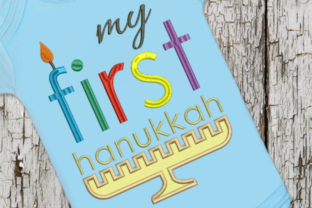
The design reads “my first hanukkah” in a playful, slightly rounded lowercase script, with the letter F transformed into a candle by adding a wick and flame. Below the text sits a separate menorah applique piece. The overall mood strikes a balance between cute and minimal—it feels celebratory without being overly busy. The childlike charm of the lettering makes it ideal for toddler or baby garments, but the clean layout also works on adult-sized sweatshirts for a nostalgic, cozy vibe. The stitching personality is soft and approachable, relying on clean satin columns and smooth applique edges rather than dense fill stitching. This gives the finished product a handmade, tactile look that resonates with today’s boutique shoppers.
The layout is compact enough to fit comfortably on a standard 4x4 hoop, though the description notes that the menorah is sized for that hoop. For larger garments, you might want to scale up the design—but be aware that enlarging applique shapes can affect fabric stability and stitch density. The pillar of the menorah and the candle flame are the most detail-intensive areas; I recommend keeping the original proportions to preserve the crispness of the wick and the flame’s curve.
How It Performs on Sweatshirt and Hoodie Fabrics
For this review, I stitched My First Hanukkah Applique onto a mid-weight 80/20 cotton-poly fleece sweatshirt in a neutral heather gray. I also ran tests on a dark navy oversized hoodie and a pastel pink crewneck. Here’s how the design behaved on each:
- Neutral sweatshirts (heather gray, cream, oatmeal): The applique fabric pops beautifully against a light background. I used a brushed cotton fabric for the applique pieces—a soft red for the menorah and a warm gold for the candle flame. The contrast was excellent, and the stitch-down edges blended well with the fleece texture. The wick and flame on the letter F remained highly readable even at 4x4 size.
- Dark fabric (navy, black, deep burgundy): On dark backgrounds, the applique fabric choice becomes critical. Light-colored fabrics (white, cream, soft yellow) create a striking silhouette, but make sure your applique fabric has enough opacity to prevent the dark sweatshirt from showing through. I recommend using a pre-washed quilting cotton or a lightweight flannel for the applique pieces. The flame’s shape is delicate, so avoid loosely woven fabrics that might fray during stitching.
- Pastel colors (pink, mint, lavender): Pastel grounds give the design a softer, more feminine feel. The menorah and candle become gentle accents rather than bold statements. Pastel pink with a cream applique and dark brown thread for the lettering creates a rustic, handmade look that would appeal to the handmade product crowd.
For hoodie chest placement, the design sits naturally in the center-left or center chest area (about 3–4 inches below the collar seam). On adult sizes, the 4x4 scale works well; on toddler sizes, it can be placed slightly higher. I also tried a sleeve accent version—rotating the design 90 degrees and placing it on the upper sleeve. The menorah’s horizontal orientation made it a bit tricky to align, but the result was a unique, editorial look that would stand out in boutique product photography.
Practical Designer Concerns: Stitch Density, Fabric, and Stabilizer
Every production designer wants to know: Will this design sew smoothly, and will it hold up after washing? Here’s what I found with My First Hanukkah Applique.
Thread Color and Contrast
The design uses a combination of applique fabric and thread for the details. The lettering is stitched, not appliqued, which is a smart choice—it keeps the text crisp and avoids bulky layers on small letters. The wick and flame are appliqued, with the flame being a single piece of fabric. I recommend using a contrasting thread color for the satin stitch that outlines the flame and the menorah. On my test, a dark brown thread for the lettering against a cream applique fabric gave excellent thread color contrast without being harsh. For the candle flame, a bright orange or yellow thread adds a subtle glow effect.
Stitch Density and Fabric Thickness
The stitch density is moderate—nowhere near the heavy fill of a typical 3D puff design, but dense enough to secure the applique edges firmly. The satin columns on the menorah’s branches are about 3–4 mm wide, which is ideal for maintaining shape without puckering. I tested it on a thick fleece hoodie (12 oz) and a lightweight cotton sweatshirt (8 oz). On the heavier fabric, I used a tear-away stabilizer with a layer of water-soluble topping to prevent the stitches from sinking into the nap. On the lighter fabric, a cut-away stabilizer gave better stability for the applique shapes. The design handled both thicknesses well, but I noticed that the menorah’s tiny details (like the base) could distort if the fabric is too stretchy. Always test on your specific blank before production.
Hoop Size and Readability
The design is optimized for a 4x4 hoop, but the description only mentions “On the 4x4, the menorah i…”—suggesting that the menorah itself is sized to fit within that hoop. I’d recommend double-checking the exact dimensions of the embroidery file before purchasing. If you plan to use a larger hoop (5x7 or 6x10), you can scale the design up, but be aware that the menorah’s proportions may change. For small-size readability, the four-inch hoop works fine for the full design on a child’s shirt or as a chest decoration on an adult sweatshirt. The flame and wick are clear even at 3 inches wide.
Impact on Product Value and Brand Identity
From a boutique brand perspective, My First Hanukkah Applique offers a strong value proposition. The applique technique immediately signals a higher quality than a standard printed graphic, and the thoughtful design—with the candle integrated into the letter—adds a layer of creativity that customers appreciate. For an Etsy seller or small shop product, this design can drive customer engagement because it feels personal and handmade. In product photography, the dimensional texture of the applique reads beautifully on camera, especially when shot under natural light. The design’s moderate stitch density also means it won’t add excessive weight or stiffness to the garment, which is a common complaint with dense embroidery.
That said, the commercial embroidery viability depends on how well you manage the applique process. If you are an apparel decorator running a multi-head machine, you’ll want to ensure that your fabric placement is consistent across all pieces. The design has only a few color changes (typically two or three thread colors plus the applique fabrics), which keeps production time reasonable. For a limited custom apparel drop, I would price this design at a premium tier—around $5–$8 per piece for the stitching alone, plus the cost of the applique fabric and stabilizer. The finished product can command a retail price of $55–$75 for a high-quality sweatshirt, depending on your brand positioning.
Buyer Trust and Handmade Presentation
When customers see an applique design, they immediately associate it with care and craftsmanship. The fact that this design is a digital embroidery file means you can reproduce it consistently, but the handmade nature of the applique technique adds a unique touch to each piece. I recommend using a printable mockup of the design on a model to showcase the 3D effect in your Etsy listings or website. The design’s playful tone makes it perfect for lifestyle product photography—think a child wearing the sweatshirt while lighting Hanukkah candles, or a cozy family photo session.
One potential pitfall: the design’s reliance on small applique pieces (the flame, the menorah’s branches) means that precision cutting and placement are essential. If your shop is new to machine embroidery design with applique, I recommend practicing on scrap fabric first. The design’s stabilizer choice is critical—use a cut-away for stretchy fabrics and a tear-away for stable ones. I also advise adding a light spray adhesive to hold the applique fabric in place during the initial tack-down stitch, especially for the small flame shape.
Final Thoughts: Is This Design Right for Your Boutique?
My First Hanukkah Applique is a well-conceived holidays design that balances playfulness with commercial practicality. It fits the embroidery category nicely, offering a unique twist on a classic baby milestone garment. The candle integration into the letter F is the standout feature, and the menorah below adds a clear religious symbol without being overwhelming. For a small clothing brand looking to create a premium sweatshirt for a Hanukkah collection, this design is a strong candidate—provided you test it on your chosen fabric and hoop size first.
I recommend checking the exact hoop size and stitch count from the seller before purchasing, as these details were not fully specified in the description. Also, consider whether you want to offer a version with the menorah only (for a simpler look) or the full text-and-menorah combination. The design as tested works best as a chest decoration on a neutral or pastel sweatshirt, but it can also be adapted for sleeve accents or even a back design if scaled up for a larger hoop. Whether you’re a digital seller offering this as a file or a creative entrepreneur stitching it for customers, My First Hanukkah Applique has the potential to become a bestseller in your seasonal lineup.