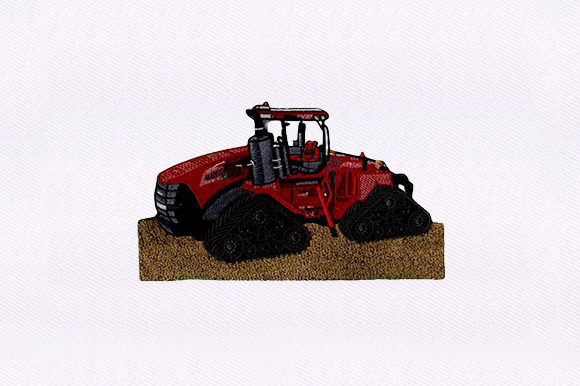
Quadtrac Tractor: A Design Review for Small Business Merch
When I first opened the Quadtrac Tractor machine embroidery design, I immediately saw a piece that leans into rugged, farm-inspired visual language. It does not try to be cute or overly decorative. It feels honest, bold, and utilitarian. For a small business owner looking to add a agricultural or rural touch to branded merchandise, this embroidery file offers a strong foundation. The description calls it intricate, and from a designer standpoint, that means careful digitizing, layered stitch patterns, and a result that stands out on fabric. But before you sew it onto a single cap or apron, you need to examine how it performs in real commercial embroidery work. Let me walk through what I see as an experienced designer reviewing this for small business merch, embroidered patches, and branded product use.
First Impressions: Bold, Rustic, and Professionally Grounded
The Quadtrac Tractor design reads as a classic farm silhouette with enough detail to feel premium without being fussy. It does not try to be a photo-realistic replica. Instead, it uses clean lines and deliberate stitch density to create a shape that is instantly recognizable. The overall impression is professional and grounded. It would not look out of place on a work shirt at a feed store, an apron in a bakery that sources local grains, or a cap worn by a small farm-to-table operation. The design feels handmade in the best sense, as if it was drawn with care and then translated into a digital embroidery file with attention to stitch angles and thread flow. For a small business, this kind of visual personality builds trust. It says, "We know what we do, and we take pride in it."
Real Business Use: Where Quadtrac Tractor Shines
After testing similar designs in my own studio, I can tell you the Quadtrac Tractor has strong potential across several product categories. For an embroidered patch, the design holds up well because the tractor shape provides a natural boundary. You can edge it with a satin stitch border and have a finished patch ready for iron-on or sew-on application. That is a fast route to small business merch like hats, tote bags, and aprons, especially for a café, farm stand, or boutique that sells artisan goods. The design also works as a chest logo accent on a uniform. Imagine a small crew at a local creamery or a plant nursery. One clean embroidery of the Quadtrac Tractor on the left chest of a work shirt instantly gives the team a cohesive, branded look.
For custom apparel, I see this design fitting well on the back of a denim jacket or as a centerpiece on a tote bag design. The tractor silhouette is broad enough to fill a space without requiring excessive stitch count, which helps keep production time manageable. If you are a handmade brand or Etsy seller creating limited runs of embroidered goods, this design can become a signature piece. It also works for event merch, such as a harvest festival or a farm-themed market. The digital embroidery file can be scaled to fit different product sizes, and that versatility is key for small business owners who want one design to work across multiple items.
Applications for Branded Patches and Product Labels
One of the smartest uses for Quadtrac Tractor is as an embroidered patch for merchandise. Patches allow you to add branding to items without committing to direct embroidery on every piece. You can produce a batch of patches and then attach them to caps, bags, aprons, or even product packaging accents. For a small business that sells handmade soap, honey, or baked goods, a patch on a cloth bag or a tag adds a tactile, premium feel. The tractor design, with its farm association, reinforces a brand identity rooted in authenticity, hard work, and local roots. It also works well for staff uniforms. A patch on a sleeve or chest is subtle but unmissable. If you own a café, a florist, or a pet brand with a rustic theme, this design can become a visual anchor for your entire product line.
I also see potential for using Quadtrac Tractor on product packaging accents. A small embroidered patch attached to a tote bag or a reusable produce bag adds value that a printed label cannot match. The tactile quality of thread and fabric makes the customer feel they are buying something lasting. For a creative studio or a handmade shop, this design can be part of a limited-edition collection. The farm theme is broad enough to appeal to many customers, but specific enough to create a distinct visual identity.
Where to Use Careful: Size, Fabric, and Detail Thresholds
No design is perfect for every application, and Quadtrac Tractor has limits. The first thing I check with any machine embroidery design is how it behaves at small sizes. For a cap front, you typically have a sewing area of about five inches wide by two inches tall. If the tractor is digitized with many fine details, shrinking it too much can cause thread breaks, poor definition, or a muddy look. I recommend testing the design at the exact size you plan to use before committing to a production run. For a small patch, you may need to simplify the design or increase the size slightly to keep the tractor shape crisp.
Stitch density is another factor. The description says the design is intricate, which often means higher stitch counts. Dense stitching can be problematic on textured fabrics like fleece, heavy canvas, or some performance fabrics. The needle may struggle to penetrate evenly, and the result can be a puckered or distorted design. Use a proper stabilizer, such as a cutaway for caps or a tearaway for stable woven fabrics, to keep the embroidery clean. I also advise testing on dark uniforms. The thread colors you choose will affect visibility. If the tractor is digitized with fine outlines, a dark thread on a dark fabric will disappear. Always check contrast before stitching.
Frequent washing is another consideration. Items like aprons, work shirts, and tote bags see regular laundering. Dense designs can shrink or fray over time if the stabilizer is not matched to the fabric. For items that will be washed often, consider a patch application instead of direct embroidery. Patches can be removed and reattached, and they tend to hold up better on heavy-use items. Finally, curved surfaces like the front of a cap or the side of a tote bag can distort the design if the digitizing does not account for the curve. Test on a sample hoop before stitching the final product.
Brand Identity, Customer Trust, and Visual Consistency
The Quadtrac Tractor design contributes to a brand identity that values durability, heritage, and a connection to the land. For a small business, that is a powerful message. When a customer sees a tractor embroidered on a staff uniform or a product bag, they associate the brand with reliability and hard work. It builds trust. The design is not overly stylized, which means it will not go out of fashion quickly. It is a classic symbol that can be used for years without feeling dated. For a handmade product, the embroidered detail signals that the business cares about quality. It is not a mass-produced decal. It is stitch work, and that takes time and skill.
Visual consistency across your merchandise is crucial. If you use Quadtrac Tractor on caps, aprons, tote bags, and patches, keep the thread colors and scale consistent. That repetition reinforces brand recognition. For a small business, every product is a touchpoint. The tractor design becomes a visual anchor that customers remember. It also helps with buyer engagement. People love to ask about a unique embroidered detail. It starts a conversation. "Where did you get that tractor on your apron?" That is a moment when a customer can become a brand advocate.
Practical Embroidery Designer Notes for Production
Before you run a full batch of merch, follow these steps to avoid costly mistakes. First, test the design in black and white thread. That lets you see the shape and density without color distraction. If the design looks clear in monochrome, it will likely work in color. Second, check the design at two or three sizes, including a small patch size and a larger chest logo size. Some designs lose detail when shrunk. Third, review thread color contrast. If the tractor is primarily brown or green, make sure it stands out against the garment color. Fourth, inspect the spacing between elements. If the design has tight gaps, they may close up with thread buildup. Fifth, confirm the hoop size needed. The design should fit comfortably in your available hoop without forcing the fabric.
Sixth, test on real fabric. The same design can look different on twill, cotton, denim, or performance mesh. Use the stabilizer you plan to use in production. Seventh, create a printable mockup for client approval. A digital mockup helps the client see the design on the actual product. Eighth, compare the design beside your other brand assets. Does it match the logo, font, and overall style? If not, consider adjusting thread colors or scale. Ninth, confirm commercial licensing. The product description says it is a high-quality embroidery for your next sewing project, but you need to verify that the digital embroidery file includes commercial use rights. If you are selling the finished product, you must have the right to do so. If the license is unclear, contact the seller before stitching for clients.
Finally, store the embroidery file in a backup location. Digital files can be lost, and re-downloading may not always be possible. Keep a copy of the thread chart and any notes about recommended stabilizer. These details save time on future orders. In my experience, a well-tested design becomes a reliable asset for your business. Quadtrac Tractor has the potential to be that kind of asset, but only if you confirm the technical details before production.
Final Thoughts on Quadtrac Tractor for Small Business Merch
Quadtrac Tractor is a solid machine embroidery design for small business owners who want to add a farm-inspired, professional touch to their merchandise. It works well for embroidered patches, caps, aprons, tote bags, and staff uniforms. The design feels bold and rustic without being cartoonish, which makes it appropriate for a range of local businesses, from bakeries and florists to pet brands and creative studios. The key to success is testing. Check stitch density, thread contrast, hoop size, and fabric texture before you commit to a production run. Use a proper stabilizer, create a mockup for client approval, and confirm commercial licensing. If you handle those details, Quadtrac Tractor can become a reliable element of your brand identity. It is a design that customers will notice, remember, and trust.